Paard en Ruiter
Jaren geleden opende Arend Feenstra mijn ogen voor een waardevolle kant van het vliegeren. Hij zei: "elke vlieger is een boodschap van mens tot mens, een kommunikatievorm dus." En inderdaad heb ik door dat gevlieger al heel wat aardige mensen leren kennen met de meest uiteenlopende achtergronden uit diverse landen. Voor mij was het een verrassing, kennis te maken met iemand die al jaren in mijn stad woont en werkt en die een heel boeiend staaltje van volkskunst kan laten zien, namelijk de Surinaamse vechtvlieger. Als een nieuwe abonnee van VLIEGER levert Eric Redout meteen al een interessante bijdrage, waarin ik hem verder graag zelf aan het woord laat.
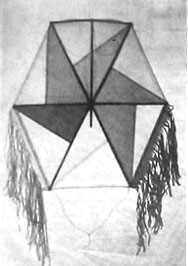
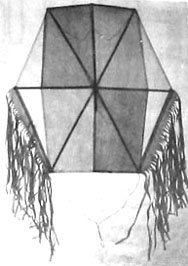
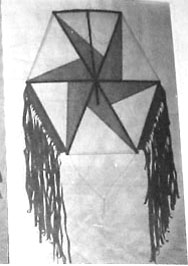
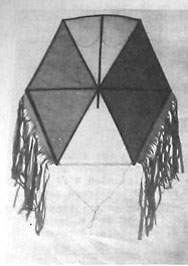
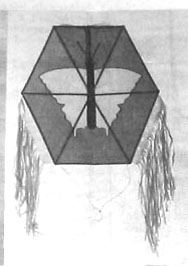
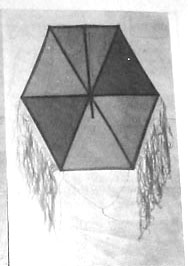
The Surinam fighters can take different designs and colors, but the shapes are generally similar - a somewhat stretched hexagon. The sides at the top and bottom are shorter than the other four. More importantly the top consists of a bow. Like all fighter kites, it cannot be disassembled, but because of the small size there is really no need to do so. It likes a moderate to fresh breeze and will happily hum along.
Een Surinaamse vechtvlieger kan allerlei figuren en kleuren dragen, maar heeft in hoofdzaak steeds dezelfde vorm, een enigsziens gerekt zeskant. De zijden aan neus en staartkant zijn wat korter dan de vier andere. Die aan de neuskant is bovendien in een sterk gekromde boog gespannen. Zoals alle vechtvliegers is ook deze niet demontabel, maar dat hoeft ook niet want hij is maar klein. Toch houdt hij van een stevige wind en zingt daarin het hoogste lied.
Het geraamte. Een stevig geraamte maken we van gespleten bamboe en sterk garen. Het bestaat uit vijf staven: de drie diagonalen, waarvan de ligger wat korter is, de boog langs de neuskant en de korte staander vanaf het midden van de boog tot even voorbij het kruispunt. De omtrek is een over de stokeinden gespannen draad van stevig garen, bijvoorbeeld ijzergaren. Begin met de middenkruising goed vast te binden. De neusboog wordt gespannen en tussen de voorste diagonaaleinden gebonden. Nu spannen we de omtrekdraad van ijzergaren over de zes stokeinden zo strak dat de kruisende staven (behalve de staander) licht gebogen zijn. De draad wordt daarbij aan de einden geknoopt en daarna vastgelijmd.